
15 Classic Low Taper Haircut Styles for Every Face Shape
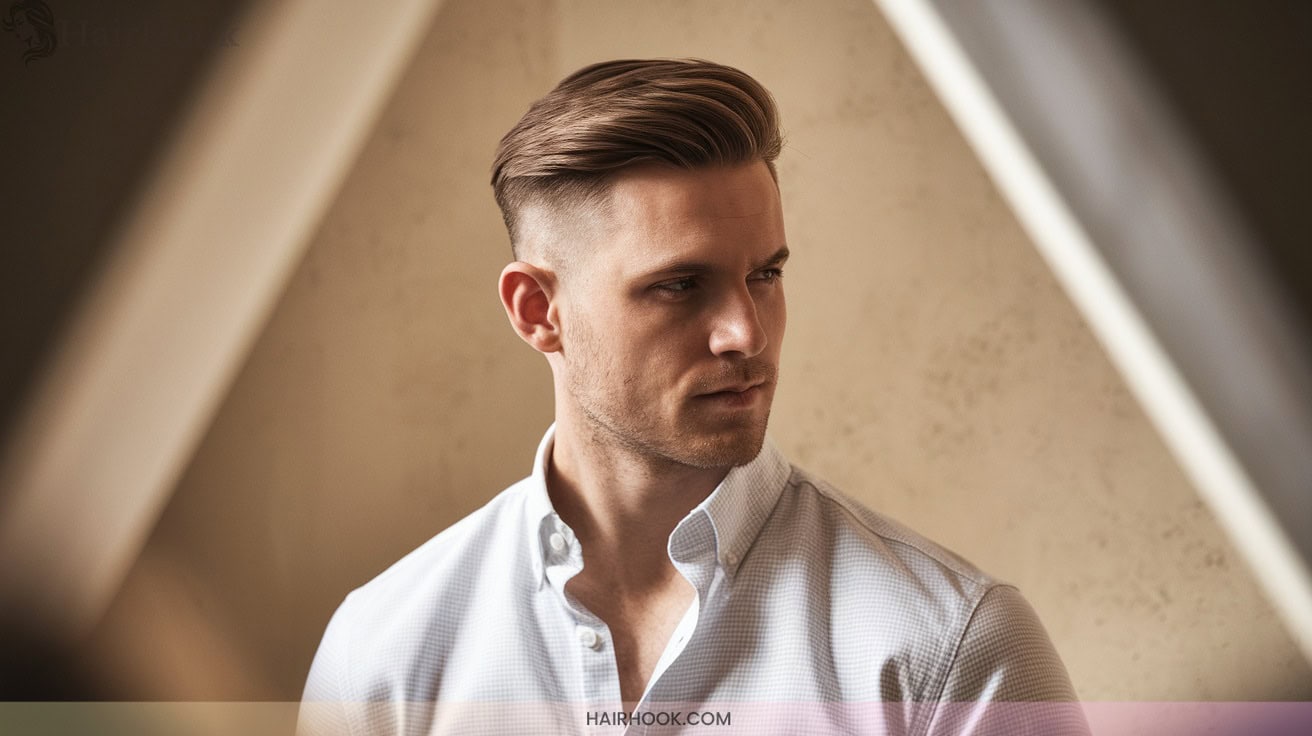
You’ll find a classic low taper suits every face shape when you choose the right variant—like a blunt low taper for structure, a curly low taper for texture, or a slick-back low taper for polish.
Adjust the taper’s height, blend, and finish to balance facial features, adding volume at the crown for round faces or softening angles for square jaws. Precise clipper work, targeted layering, and proper product use achieve a fresh, tailored look. Explore distinctive options tailored to your needs ahead.
1. Blunt Low Taper for Sharp Definition


A blunt low taper delivers sharp definition by merging a precise, straight-across perimeter with a gradual, controlled fade from the crown down to the nape and ears.
A blunt low taper creates bold contrast, combining a clean, straight edge with a subtle, expertly blended fade around the sides and back.
You’ll use clipper guards—start with a #3 at the parietal ridge, taper to #1.5 at the nape—while maintaining no layers for maximum density.
Shear at 90° elevation on top for uniform length.
Taper the neckline 1-2 inches above the natural line for seamless grow-out.
Adapt the weight line above the occipital for structure.
Style with matte clay, blow-dry for lift, and trim every 3-4 weeks to keep lines crisp.
2. Curly Low Taper for Natural Texture

While the blunt low taper delivers crisp lines and density, a curly low taper focuses on enhancing your natural texture with a clean, gradual fade.
This technique supports all curl types, from tight 4C coils to loose curls, maintaining volume atop while tapering the sides and nape for balanced proportions.
Use wash-and-go routines, twist-outs, or finger-coiling for heat-free curl definition, and lightweight leave-ins to avoid buildup.
Adapt lengths for your face shape—adding crown height for round faces, fringe for oblong, or side volume for heart-shaped.
Schedule trims every 3-4 weeks, prioritize hydration, and use satin accessories to minimize frizz.
3. Textured Crop Low Taper for Added Volume

Opt for the textured crop low taper if you want added volume and a modern, adaptable silhouette.
This cut leverages layered and razor-cut techniques to maximize texture and structure, making it especially effective for those with thinning or fine hair.
Use matte styling products or texturizing sprays to define layers without excess shine.
It suits all face shapes—add height for round faces, soften angular features for square or triangular shapes, and balance heart-shaped profiles.
The low taper keeps maintenance minimal and versatile; style it messy for casual looks or refine it for professional settings with ease.
4. Slick-Back Low Taper for a Polished Look
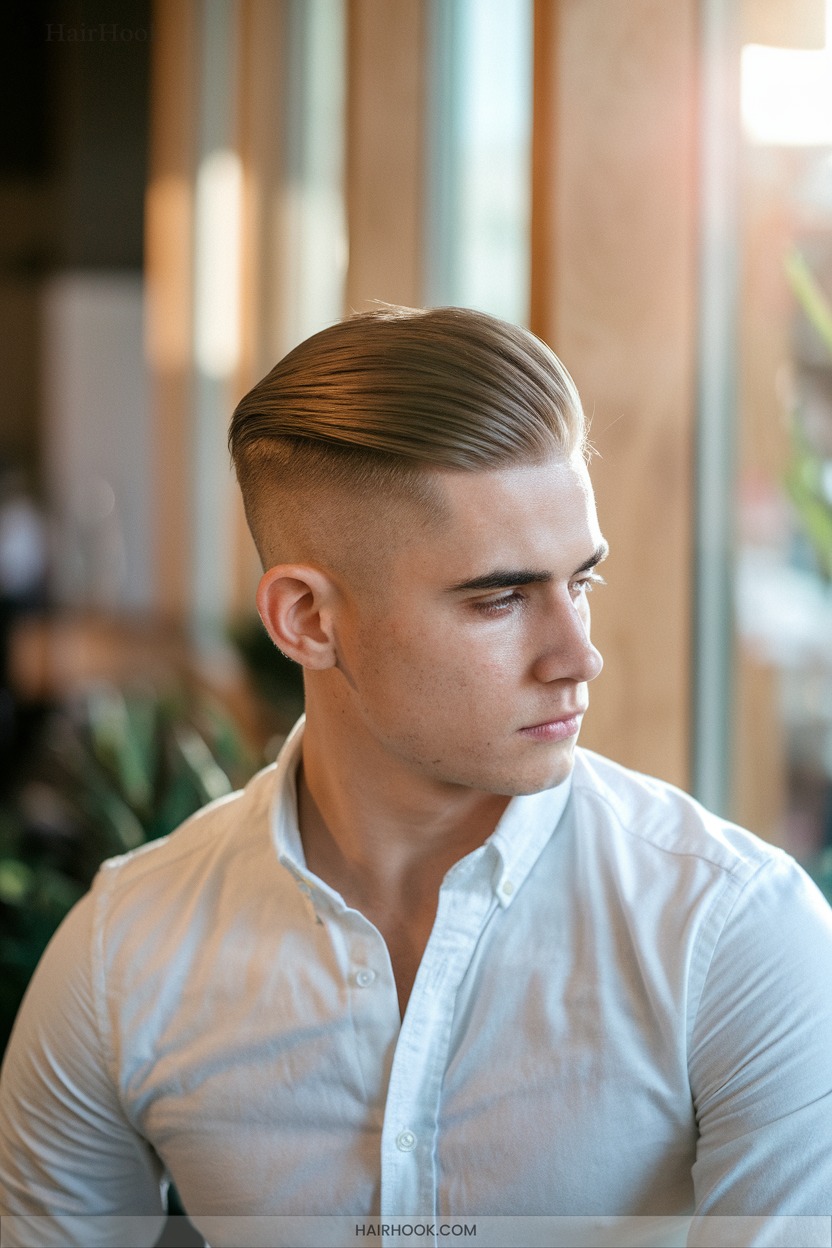
For a refined yet contemporary appearance, the slick-back low taper delivers a seamless blend of classic polish and modern edge.
The slick-back low taper offers timeless sophistication fused with a fresh, modern attitude for a truly versatile style.
Start by prepping clean, damp hair, then distribute a lightweight pomade for a flexible, non-crunchy hold.
Use a fine-tooth comb to direct hair back precisely, and blow-dry for volume and structure.
Customize taper length and shape for your face profile to achieve ideal balance.
Maintain sharp lines and healthy texture with regular trims and strategic product use.
- Prep with heat protectant for styling safety
- Opt for matte or shine finish per occasion
- Schedule trims every 3 weeks
- Clarify monthly to prevent residue
- Adapt taper to your facial structure
5. Hard-Part Low Taper for Statement Style

A hard-part low taper delivers a bold, structured look by combining a razor-shaved part with a precisely blended fade that starts just above the ears.
You’ll achieve sharp visual separation by using a 0.1mm blade for the hard part and clipper guards (#2 to #0) for a seamless taper.
This style suits all hair types and adapts to every face shape—balancing ovals, softening squares, and adding angularity to rounds.
Maintain the crispness with trims every 2-3 weeks, edge-up touchups, and scalp moisturization.
Experiment with disconnected, curved, or double hard parts for a modern, innovative twist on classic structure.
6. Low Taper With Pompadour Top
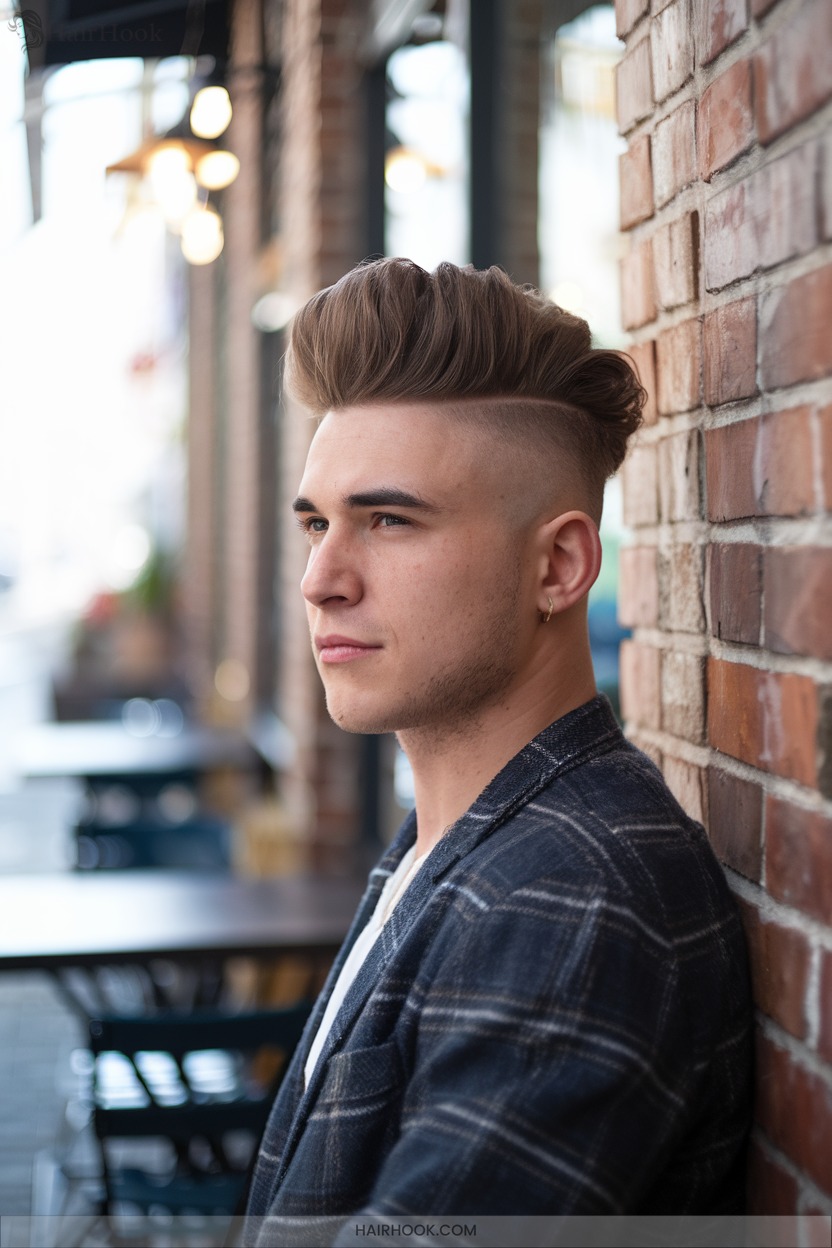
Elevate your hairstyle with a low taper paired with a pompadour top, a look that fuses classic volume with modern precision.
This cut features short, gradually tapered sides and a voluminous top, seamlessly blending from the neckline to the crown.
Ideal for innovators, it relies on expert scissor-over-comb and clipper techniques.
Adapt the pomp’s height and texture to suit your face shape for ideal balance and style longevity.
For best results, incorporate these essential steps:
- Use a #2-4 guard for a clean taper foundation
- Sculpt with point-cutting for movement
- Blow-dry upward with a round brush
- Apply matte paste for hold
- Schedule bi-weekly trims
7. Side-Swept Fringe Low Taper

Transform your look with a side-swept fringe low taper, a style that unites sharply faded sides with a textured, diagonally brushed front.
Leverage a matte clay or paste to define separation, and use a blow dryer to build volume before sweeping the fringe across your forehead.
Tapering starts low, just above the ear, maintaining density above the temples for a contemporary silhouette.
This versatile cut adapts to any face shape—curving the fringe to soften, add height, or balance proportions.
Maintain sharpness with biweekly fade touch-ups and fringe trims, using thinning shears for controlled movement and anti-frizz serum for polish.
8. Low Taper for Oval Face Shapes

For oval face shapes, the low taper haircut offers maximum versatility and balance, accentuating your natural proportions without overwhelming your features.
This style adapts seamlessly to textured, curly, or straight hair, letting you innovate with minimal effort.
You can fine-tune the length on the sides for further personalization, while the fade’s clean lines keep maintenance simple.
To elevate your look and guarantee the cut suits any occasion, consider these strategies:
- Pair with a textured crop for a timeless effect
- Use pomade or matte clay for added definition
- Combine with a well-groomed beard for depth
- Select short or medium lengths
- Schedule regular trims for sharp edges
9. Low Taper for Square Face Shapes

A low taper haircut suits square face shapes by skillfully balancing sharp angles and strong jawlines.
A low taper haircut expertly softens square face shapes, balancing bold jawlines with a refined, modern fade. In addition to the low taper, incorporating medium bob haircut styles can further enhance the softness of a square face. These styles frame the face beautifully, creating a harmonious look that minimizes sharp angles. Paired with the right accessories, these haircuts can exude both elegance and contemporary flair.
You’ll find that the gradual fade softens your facial structure, adding subtle curvature while still highlighting masculine features.
Pair this taper with styles like a comb-over or side-swept top to introduce dimension and modern versatility.
Thick hair benefits from increased volume without exaggerating squareness.
Maintain the taper’s precision with regular trims for a crisp fade.
Textured products elevate the style, ensuring your look remains sleek yet adaptive.
This approach offers daily practicality, cost-efficiency, and a refined aesthetic perfect for formal and innovative settings.
10. Low Taper for Round Face Shapes

While low taper haircuts expertly complement square faces by softening sharp contours, they also offer strategic advantages for round face shapes. For round faces, low taper haircuts create the illusion of length, drawing attention away from the width of the face. Additionally, those seeking flattering haircuts for oval faces may find that low taper styles provide a versatile option that enhances their natural proportions while maintaining a contemporary look. Overall, these haircuts present a balanced choice, catering to a range of face shapes and preferences.
You’ll benefit from vertical emphasis and structured contrast, making your face appear longer and sharper.
Precision matters—keep the taper starting just above the ear and use subtle gradients to avoid overwhelming soft features.
Opt for styles that introduce texture and angularity.
For an innovative, face-slimming result:
- Try textured crops with faded sides for balanced volume.
- Slick back longer tops to add vertical height.
- Use curly faux hawk tapers for dynamic lift.
- Employ hard part comb-overs for diagonal definition.
- Explore Asian-inspired two-block cuts for sharp contrast.
11. Low Taper for Long Face Shapes

Low taper haircuts deliver a refined solution for long face shapes by establishing a balanced hair-to-face ratio and enhancing facial definition. These cuts not only provide a soothing symmetry but also create a stylish framework that draws attention to the eyes and cheekbones. Low taper styles are among the most versatile haircuts for medium length, allowing for easy styling whether you prefer a polished look or something more relaxed. With the right products, it’s easy to maintain texture and movement, making these haircuts a practical choice for daily wear.
You should request a low taper with added texture or a subtle fringe to break vertical lines and reduce perceived facial length.
A quiff or layered top introduces volume and width, counteracting elongation.
Adjust the taper’s height according to your unique proportions; communicate your facial structure to your barber for a tailored result.
Opt for styling techniques like a side fringe or texturized finish to further soften angular features, ensuring your look remains innovative, polished, and distinctly contemporary.
12. Low Taper for Triangular Face Shapes

For triangular face shapes, achieving visual balance hinges on selecting a low taper haircut that reduces the jawline’s width while drawing attention upward.
You want to use innovative techniques that emphasize the upper face and soften the lower contours.
Integrate volume and texture at the crown, and steer clear of ultra-short sides that could accentuate the jaw.
Prioritize adaptability and modern layering for maximum effect.
Try these expert-approved strategies:
- Add a textured fringe for forehead width
- Opt for a layered cut to boost volume
- Use sea salt spray for enhanced texture
- Blow dry with a diffuser for lift
- Avoid sharp, short fades
13. Low Taper With Beard Blend

Achieving a seamless low taper with a beard blend requires a methodical approach that respects both hair and facial hair architecture.
Begin by anchoring your guideline at the hairline’s corner or ear top, using a closed lever for bulk removal.
Progressively open the lever mid-stroke to soften blends; think of lever positions as your cutting compass—closed for shorter cuts, open for length.
Employ a #1 or #1.5 guard for bulk, then shift to a #0.5 guard for mid-blend.
Use zero-gapped clippers for detail, matching texture by flicking upward.
Optimize lighting and posture, and maintain the blend with regular edge-ups and hydration.
14. Low Taper for Professional Settings

A well-executed low taper delivers a refined, understated look that suits demanding professional environments.
You’ll benefit from its gradual shortening, which offers subtle contrast and natural flow—essential for maintaining credibility and polish at work.
The absence of harsh lines means seamless blends, while shorter sides create structure without dramatic scalp exposure.
Leverage the low taper’s adaptability for different corporate cultures by adjusting length and styling techniques.
For best practices:
- Choose #1.5–#3 guard lengths for balanced side tapering
- Schedule trims every 3–4 weeks to preserve definition
- Use matte clay for controlled, non-reflective hold
- Employ thinning shears for bulk management
- Maintain scalp health with regular exfoliation
15. Low Taper for Textured and Wavy Hair

Shifting from boardroom-ready professionalism to expressive texture, the low taper adapts seamlessly to wavy and textured hair types.
Effortlessly bridging polished style and natural movement, the low taper brings out the best in wavy and textured hair. This versatile cut highlights the hair’s natural waves while maintaining a clean and sophisticated look. Perfect for those seeking a modern edge, sleek taper fade haircut styles can enhance any texture, making them ideal for a variety of hair types. Whether styled casually or dressed up, the low taper exudes confidence and charm.
Achieve precise gradients using clipper guards (#1–#3) above the ears, then blend into longer, defined waves on top.
Use matte texturizing creams or sea-salt sprays to enhance separation without heaviness; avoid over-layering, which weakens your wave pattern.
Adapt taper and top volume for face shape—oval faces suit balanced blends, while square faces benefit from softened, textured crowns.
Schedule trims every 3–4 weeks, and use leave-in conditioners for elasticity.
For humid climates, swap to anti-frizz serums and lighter formulas.
Frequently Asked Questions
How Often Should I Wash My Hair With a Low Taper Haircut?
You should wash your hair 2–4 times weekly with a low taper, adjusting for scalp oiliness and product buildup. Prioritize sulfate-free, pH-balanced shampoos, and use lightweight leave-in treatments to maintain hydration and maximize style longevity.
What Is the Best Way to Prevent Ingrown Hairs at the Neckline?
Nip ingrown hairs in the bud by exfoliating before shaving, mapping hair growth, and shaving with the grain. Use sharp blades, hydrate post-shave, and incorporate chemical exfoliants. Don’t pick—consult a barber for advanced solutions.
Can Low Taper Haircuts Work With Receding Hairlines?
You can absolutely pair a low taper haircut with a receding hairline. This technique diverts focus from thinning areas, leverages structured tapering for balance, and, when combined with texture or fringe, innovatively enhances the appearance of density.
Which Hair Products Help Maintain Volume Throughout the Day?
You’ll maintain volume all day by using mousse or advanced volumizers like Color Wow Xtra Large Bombshell. Combine root lifters, dual-function heat protectants, and humidity-resistant formulas. Opt for innovative products tailored to your hair type for best performance.
Are Low Tapers Suitable for Children or Teenagers?
Don’t worry about low tapers being too mature—they’re actually ideal for children and teenagers. You get a versatile, low-maintenance cut that adapts to active lifestyles, various hair textures, and face shapes, while encouraging personal style innovation.
Conclusion
With these 15 classic low taper haircut styles, you’re not just cleaning up your look—you’re refining your personal brand. Whether you favor blunt lines for sharp definition or prefer a textured finish, there’s a low taper to flatter every facial canvas.
Consult with your barber to tailor the blend and neckline to your unique bone structure. Embrace a subtle transformation—your secret handshake to a more polished, contemporary appearance without shouting for attention.


