
15 Volumizing Lob Haircut for Fine Hair Techniques That Create Fullness

Maximize fullness in fine hair lobs by combining blunt baselines, internal undercut layers, and targeted crown elevation at 90° for structured lift. Point-cut ends for airy movement, and overdirect front layers forward for volume. Use a lightweight mousse, emulsify and apply root-to-tip, then blow-dry upside down or with Velcro rollers for root boost. Refresh between washes with a volumizing dry shampoo. Master these technical strategies for maximum, lasting volume—discover which trendy finishing touches complete the look.
What Are the Best 1. Layered Lobs With Choppy Ends?
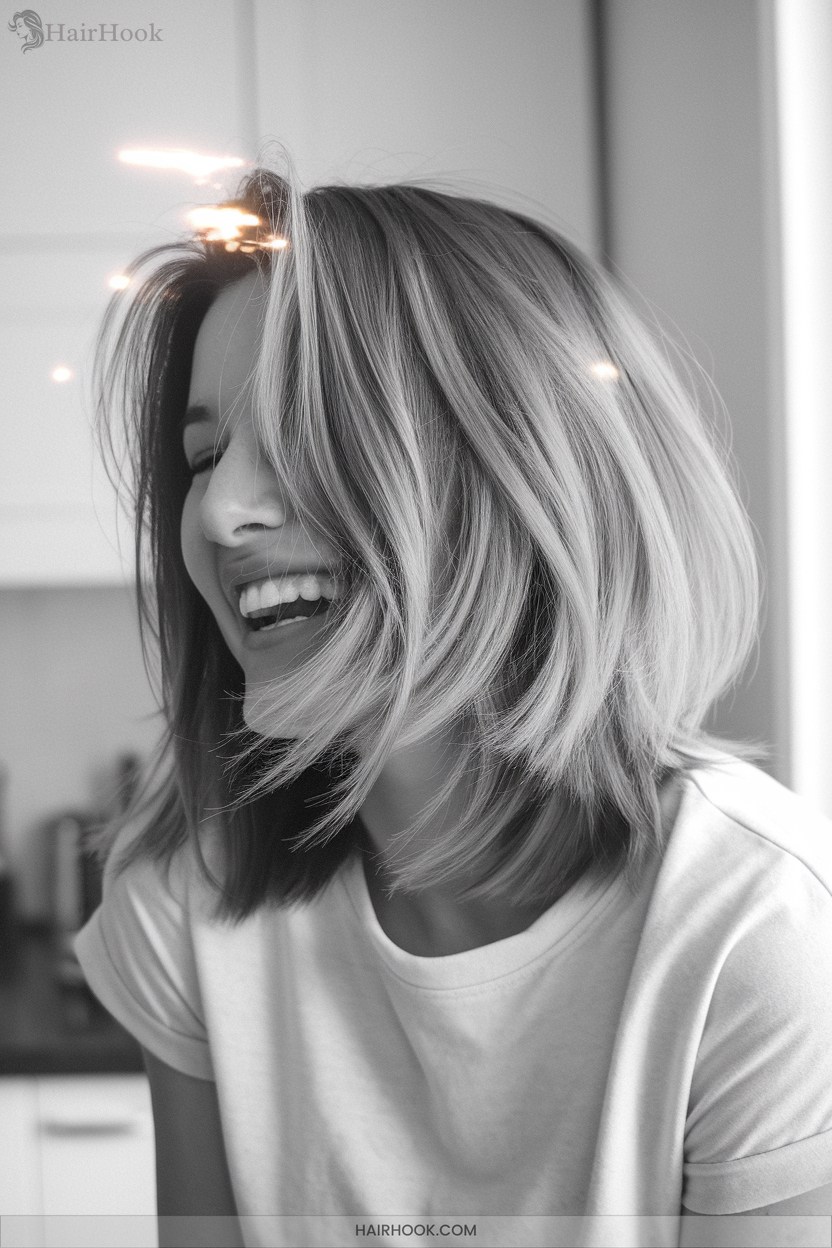
A layered lob with choppy ends transforms fine hair by combining strategic cutting methods and modern styling to maximize fullness.
Start with natural fall cutting to achieve balanced weight distribution, then utilize graduated layering and scissor-over-comb to build internal texture while retaining a heavy baseline.
Elevate crown sections to 90° for targeted volume, and point-cut the ends for a piece-y, modern finish.
Apply asymmetrical texturizing and disconnected layers for depth without sacrificing density.
Style with diffuser drying and sea salt spray to emphasize movement.
Maintain shape with 6-8 week trims and use matte paste for defined, weightless separation.
What Are the Best 2. Blunt Cuts With Subtle Undercut Layers?

While layered lobs with choppy ends amplify texture, blunt cuts with subtle undercut layers focus on structural integrity for fine hair.
Blunt cuts with hidden undercut layers build strength in fine hair, while choppy lobs deliver amplified texture and movement.
Start with a solid blunt baseline; this creates movement and swing, minimizing wispiness.
Next, add undercut layers hidden beneath the occipital bone—removing 10-15% of interior bulk for invisible lift without visual graduation.
Use volumizing mousse at roots, blow-dry upside down, and direct a mixed-bristle round brush at the crown for maximum elevation.
Curl underlayers first, alternating iron directions for multidimensional movement.
Finish with lightweight texturizing spray and root booster for lift—never overload with heavy products or excess heat.
What Are the Best 3. Face-Framing Layers for Volume?

Precision sectioning unlocks volume with face-framing layers, transforming fine hair from flat to full.
Start with horizontal sections and 1-inch subsections for exact control. Overdirect front layers forward, using mid elevation (45–60 degrees) to boost lift without sacrificing density.
Maintain even tension to prevent excessive thinning.
For trend-forward softness, employ tapered shears and point cutting at the perimeter—this diffuses edges and avoids harsh lines.
Tailor layer placement to face shape: chin-length for round, jaw-level for square, and cheekbone-starting for long faces.
Amplify results with root-lifting spray and round brushing, ensuring progressive, fashion-forward fullness at the front.
What Are the Best 4. Balancing Weight With Longer Front Sections?

Weight distribution defines the success of a volumizing lob, and longer front sections play a critical role.
Weight distribution is key for a volumizing lob, with extended front sections essential for balance and fullness.
By extending the front, you balance the lob’s overall weight while maintaining seamless movement and maximum fullness.
Strategic layering creates an illusion of density without compromising the haircut’s modern edge.
Use innovative cutting and styling approaches to optimize volume and shape:
- Gradually layer from front to back, ensuring even weight and smooth blend.
- Apply volumizing mousse to longer sections, then blow-dry with a round brush for controlled lift.
- Utilize slicing or slithering techniques to add depth, preventing bulk and enhancing facial framing.
What Are the Best 5. Point-Cutting Ends for Enhanced Texture?

After shaping the lob with longer front sections to balance weight and movement, focus on refining the ends for added texture and fullness.
Begin by sectioning the hair and holding strands straight out about six centimeters from the ends.
Using sharp, professional shears, point cut into the ends with an up-down motion, holding scissors perpendicular for softness or at a 45-degree angle for increased texture.
Work gradually, making minimal cuts to avoid over-thinning fine hair.
This technique softens blunt lines, removes bulk, and blends layers seamlessly, resulting in a modern, natural finish that amplifies movement and visual volume in fine hair.
What Are the Best 6. Blow-Drying Upside Down for Root Lift?
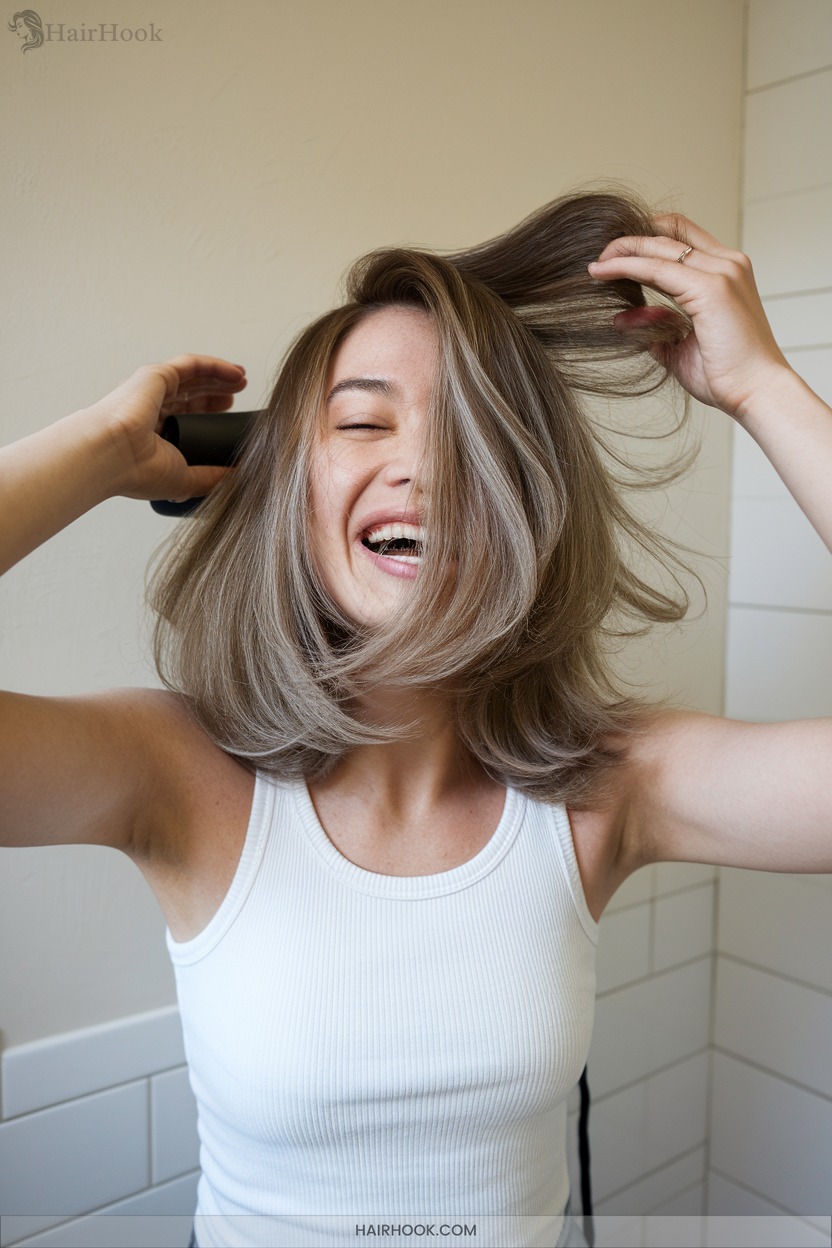
Elevate the volume of fine hair by incorporating upside-down blow-drying into your styling routine.
This advanced technique optimizes root lift and fullness, setting the stage for a voluminous, on-trend lob.
Experience elevated root lift and fullness with this advanced technique, creating the perfect foundation for a modern, voluminous lob.
Start by air-drying your hair partially, then apply a heat protectant for maximum safety.
Remove your dryer’s concentrator and use low heat.
Flip your head upside down and rough-dry, focusing airflow at the roots for maximum elevation.
For a dynamic finish:
- Section hair for targeted root lift.
- Use a round brush to amplify crown volume.
- Seal the style with a cool air blast for longevity.
What Are the Best 7. Root-Lifting Sprays on Damp Hair?
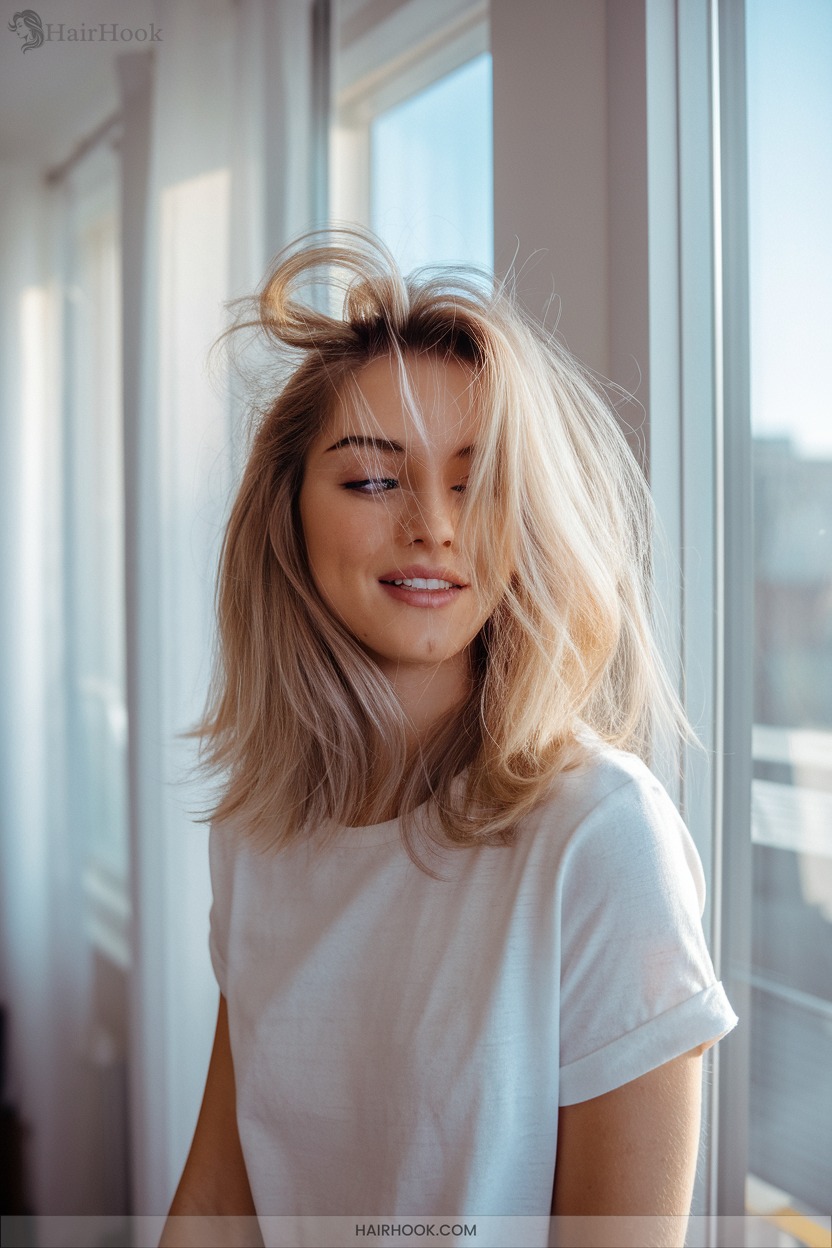
Maximize your lob’s volume by integrating root-lifting sprays directly after upside-down blow-drying.
Section your damp hair into 1–2 inch layers; shake the spray vigorously to activate advanced polymers, then hold the bottle 6–10 inches away.
Target the crown and frontal roots for maximum lift.
Select heat-activated, weightless formulas—VP/VA copolymers and humidity-resistant ingredients prevent flatness and frizz while preserving movement.
Immediately blow-dry roots with a round brush or diffuser to lock in lift with heat-reactive technology.
Limit to 1–2 sprays per section for a non-sticky, natural finish that sustains volume and enables effortless, all-day style longevity.
What Are the Best 8. Teasing at the Crown for Instant Fullness?
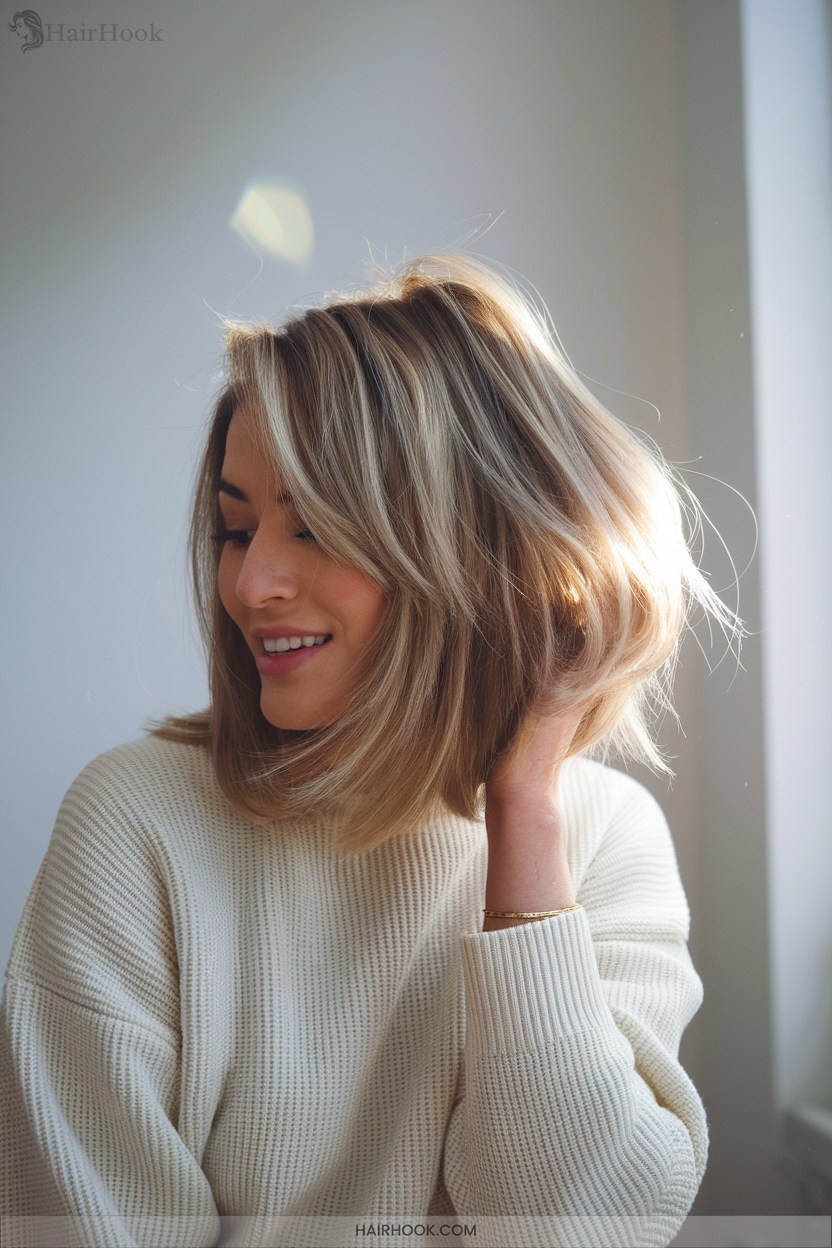
Transform flat roots into a voluminous crown by mastering the art of strategic teasing. Begin by isolating 1-inch horizontal sections at the crown with a fine-tooth comb, then secure untensed hair with clips for ideal control.
Use a fine-bristled teasing brush, holding each section taut 2-3 inches from the root. Employ short, downward strokes at the mid-shaft, targeting only the underlayers to prevent visible surface disruption.
Elevate limp roots by sectioning, teasing the underlayers, and controlling each strand for a flawless, voluminous crown.
- Sprinkle dry shampoo for texture and oil absorption.
- Tease each section 2-3 times, avoiding ends to reduce frizz.
- Set with flexible-hold hairspray, ensuring resilient, modern fullness.
What Are the Best 9. Creating Fullness With Deep Side Parts?

After boosting crown volume with strategic teasing, shift your focus to full-bodied side parting for multidimensional lift.
Use a tail comb for a clean, asymmetrical part—align near your eye’s outer corner to optimize root elevation.
Section horizontally from ear-top to recession area, over-directing hair as you cut.
Incorporate Dutch braids to anchor fine sections and merge with denser zones.
Apply wax stick to flatten flyaways; employ edge control for exaggerated swoops.
Enhance sleekness at the hairline with a mini flat iron and set the lift using blow-dryer tension techniques.
Finish with dry texture spray for weightless, lasting structure and visual density.
What Are the Best 10. Using Velcro Rollers for Lasting Height?

Ever wondered why your volumizing efforts fall flat by midday? Using Velcro rollers on fine hair isn’t retro—it’s a strategic, on-trend technique for modern fullness.
Start by prepping with volumizing shampoo, root-lifting mousse, and a heat protectant.
Then, follow this technical sequence:
- Section hair into 2″ layers and rough-dry for texture.
- Wrap hair with 1/2″-1″ Velcro or ceramic self-grip rollers, over-directing at the crown.
- Apply low heat, set with a cool shot for 5–10 minutes, then gently remove rollers using the finger insertion technique.
Finish with anti-static spray or texture mist for extended hold.
What Are the Best 11. Curling Iron Waves for Added Thickness?
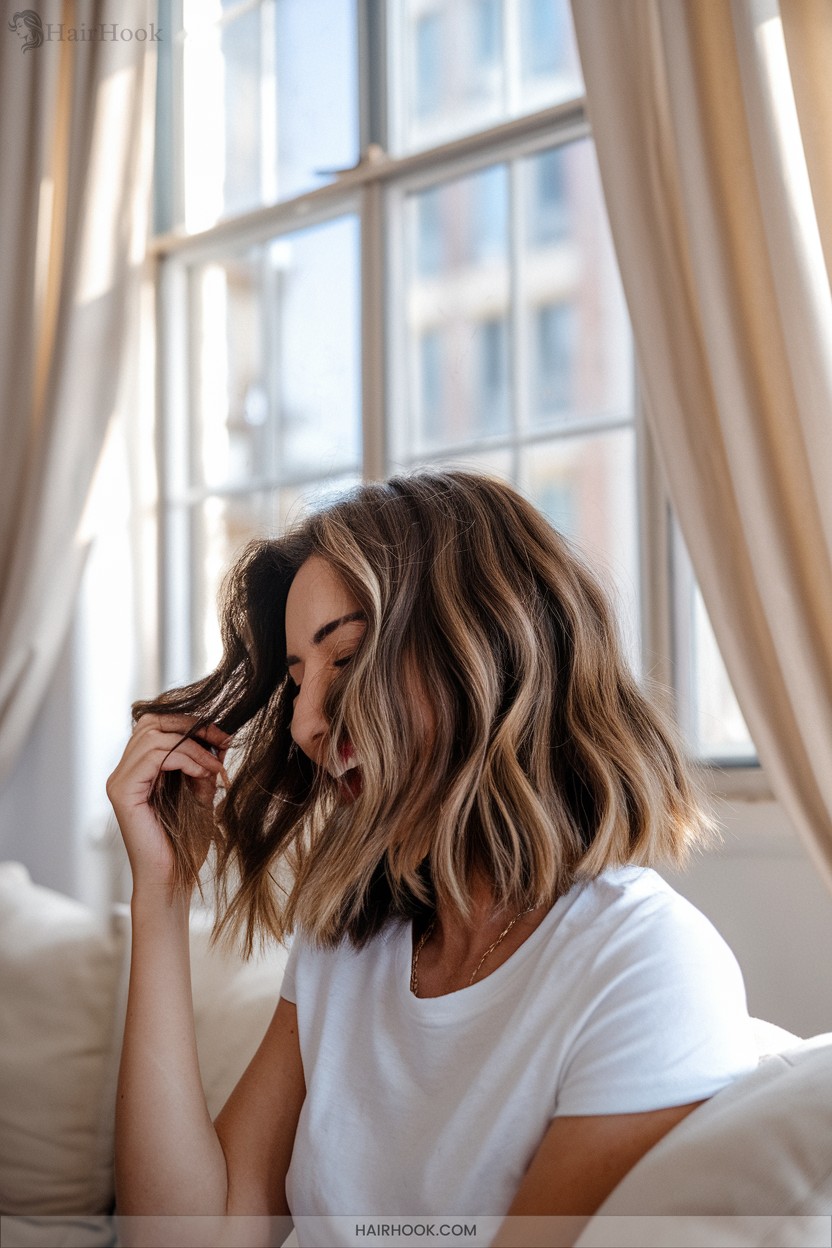
A strategic curling iron technique elevates a lob haircut from limp to lush, especially on fine hair.
Select a lightweight, long-barrel curling iron (1.25”+) with ceramic or tourmaline technology and adjustable heat (300–350°F).
Section horizontally, isolating the crown for micro-sections and using asymmetrical parting to maximize shadow density.
Employ the slide-and-wrap method, starting at mid-shaft with a vertical barrel for amplitude, alternating curl direction in underlayers.
Hold each section 8–10 seconds, then set waves with a cool-down shakeout.
Prep with heat protectant and mousse; finish with flexible-hold spray and a shine serum for separation and weightless polish.
What Are the Best 12. Texture From Flat Iron Twists?

Once you’ve mastered curling iron waves, flat iron twists offer a modern, textured alternative for volumizing a lob on fine hair.
Start by misting mid-lengths with heat protectant, then section hair horizontally, working from the bottom up to preserve volume.
Use a 1-inch rounded barrel flat iron, twisting and flipping strands away from the face for defined, soft-bend waves.
Vary your wrist angle and alternate curl directions for dimensional movement.
- Glide the flat iron quickly (1-2 seconds per inch) to reduce heat exposure.
- Tousle roots and separate curls for piece-y texture.
- Finish with texturizing spray to amplify fullness.
What Are the Best 13. Volumizing Mousse Application Techniques?
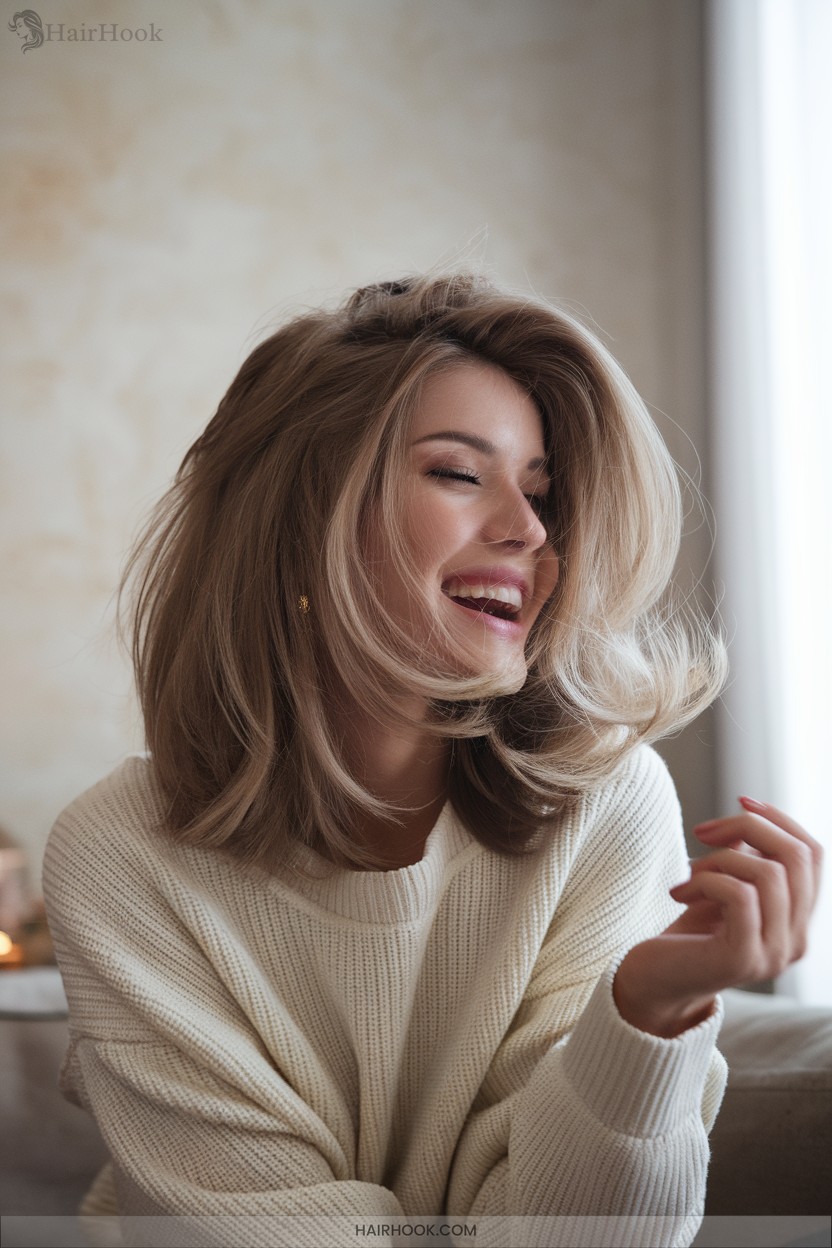
For maximum volume on a fine lob, select a lightweight, alcohol-free mousse and dispense an egg-sized dollop onto damp hair. Emulsify between palms, then section hair horizontally to achieve even application from roots to ends. Glide mousse over the surface with flat palms, then scrunch upwards to encourage root elevation.
For targeted crown lift, use fingertips to massage additional mousse into 1-inch sections at the scalp. Rake through with a wide-tooth comb to eliminate clumps without overworking. Diffuse upside down with low heat for maximum lift, or clip roots to air-dry. Avoid overload—layer only as necessary for structural fullness.
What Are the Best 14. Refreshing Hair With Dry Shampoo?
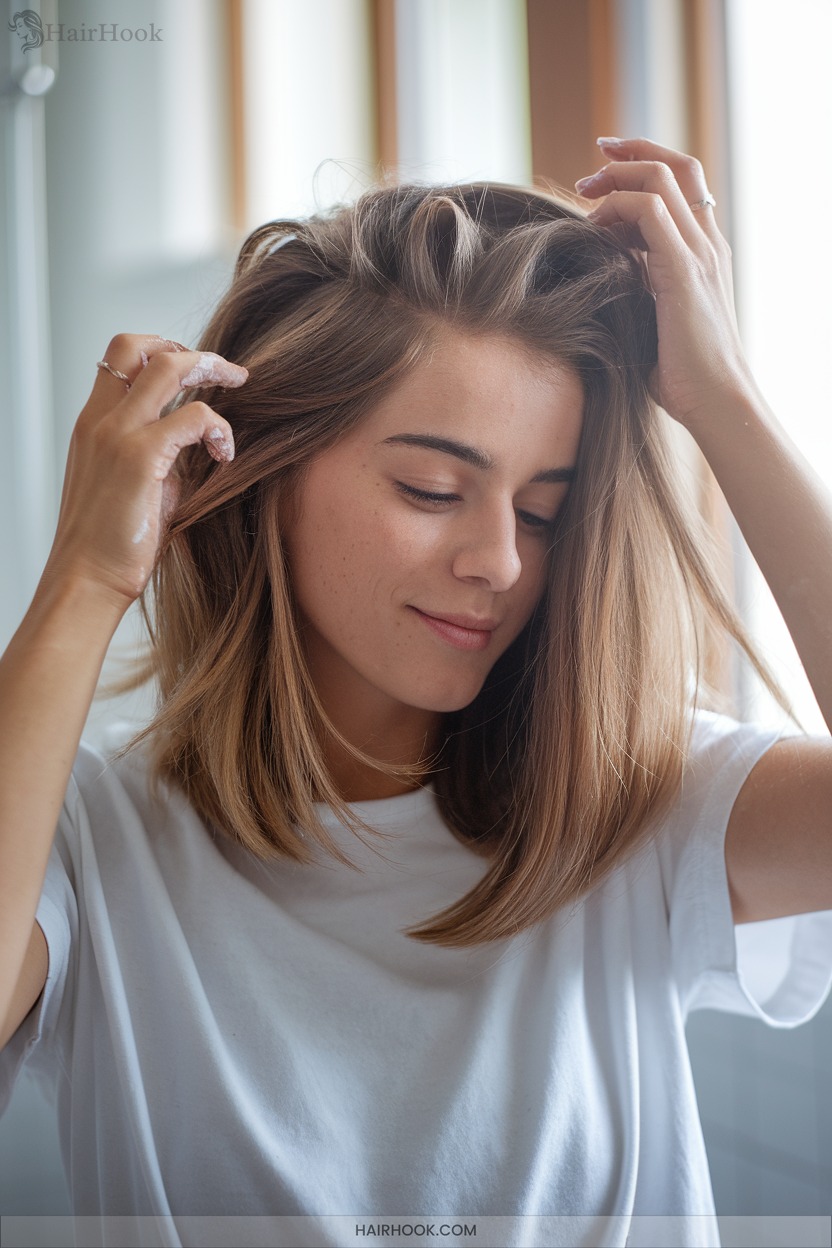
Elevate next-day volume by strategically incorporating dry shampoo into your lob routine.
For fine hair, opt for a volumizing formulation—Batiste’s line is a trend-forward favorite—ensuring oil absorption without residue.
For fine hair, choose a volumizing dry shampoo like Batiste to absorb oil and boost lift without leaving residue.
Precision application is key:
- Target the roots by spraying 6–8 inches away for even distribution.
- Massage gently to maximize oil absorption and enhance lift at the scalp.
- Brush through to blend and refresh layers while preventing product buildup.
This multi-functional step not only saves time but also revitalizes limp strands, maintains color vibrancy, and supports innovative, full-bodied lob styling between washes.
What Are the Best 15. Strategic Zigzag Parting for Disguised Sparseness?
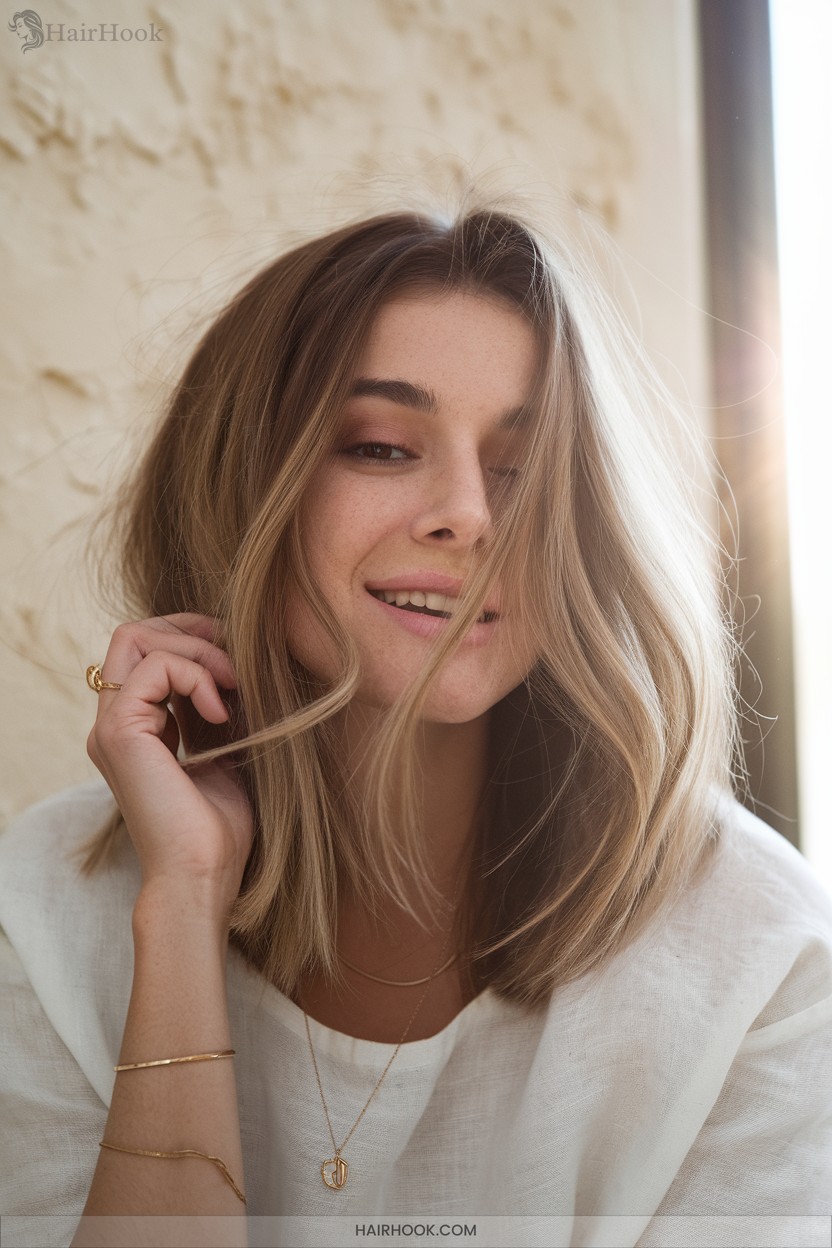
After revitalizing your lob with dry shampoo for amplified root lift, you can further disguise sparseness by mastering a strategic zigzag parting.
Select your starting point—off-center enhances volume, center delivers symmetry.
With a rat-tail comb, section hair in a controlled zigzag motion from the hairline back, working on wet strands for accuracy.
This pattern creates optical fullness, adds multidimensional texture, and shifts focus from fine areas.
Combine with layered cuts, lightweight volumizing products, or highlights for amplified results.
Zigzag partings adapt seamlessly to buns, ponytails, or braids, offering a modern nod to Y2K style while visually thickening your lob.
What Should You Know About Frequently Asked Questions?
How Often Should I Trim My Lob to Maintain Volume?
To maintain volume, you should trim your lob every six weeks. Schedule precision cuts, update layering techniques, and incorporate texturizing. This proactive cycle prevents split ends, sustains structure, and guarantees your look remains on-trend and dynamic between salon visits.
Can Silk Pillowcases Really Help Reduce Hair Breakage?
Yes, you can reduce hair breakage by switching to silk pillowcases. You’ll minimize friction, retain natural oils, and prevent split ends. Pair this innovative textile with hydrating products and nightly detangling for ideal, trend-driven results.
What Type of Brush Is Best for Fine, Volumized Hair?
For fine, volumized hair, you’ll want to use a boar bristle or teasing brush. Start with boar bristles for smoothing and oil distribution, then tease roots with a specialized brush for controlled, on-trend volume without excessive breakage.
Are There Specific Scalp Exfoliation Products for Fine Hair?
Imagine your scalp as fertile soil—yes, there are targeted exfoliators for fine hair. You’ll want scrubs with feather-light mechanical beads, fruit enzymes, and salicylic acid. Apply pre-shampoo, limit frequency, and choose trend-driven, residue-free formulas for best results.
Will Heavy Conditioners Always Weigh Down a Volumized Lob?
Heavy conditioners don’t always weigh down your style if you apply them mid-length to ends, dilute dense formulas, or use lightweight, protein-enriched alternatives. Prioritize water-based, pH-balanced innovations and integrate post-conditioner volumizing mousses for ideal lift retention.
What Should You Know About Conclusion?
Think of your lob as the architectural blueprint for building volume—each technique acts as a structural beam supporting fullness. By integrating choppy layers, subtle undercuts, and strategic product application, you’re engineering lift from root to tip.
Combine face-framing angles with modern texture methods for a lob that defies gravity and fine hair limitations. Stay on trend by adapting these techniques, and watch your style transform from flat to full-bodied with every precise, intentional step.
Related: Stunning Lob Haircut Layered Styles


